
By Aksa | Freelance marketer, Pathanamthitta, Kerala
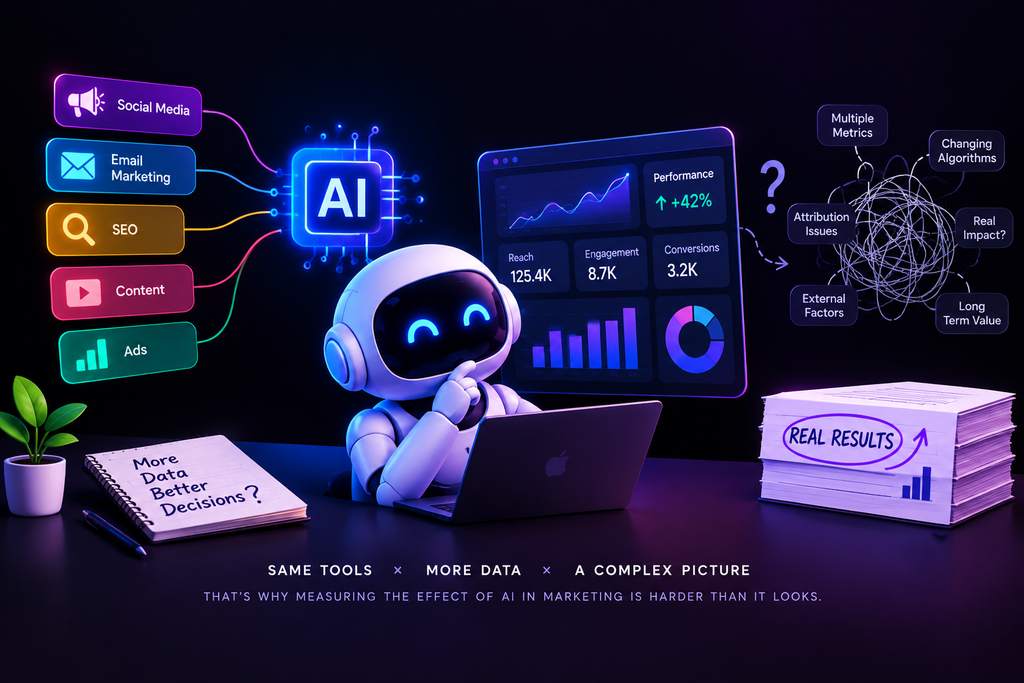
Measuring AI impact in marketing sounds simple, yet it is one of the hardest parts of using these tools well. AI can write a blog post in two minutes, but did that post bring a single visitor, enquiry or sale? That question is where most people get stuck.
AI tools can write a blog post in two minutes. Did that post cause a visitor to ask a question or to buy? Many people find that question hard to answer. Measuring AI’s impact on marketing seems simple at first. In reality, it is quite complex. This is one of the tasks that come with using these tools.
I have a BCA degree. I am learning about SEO and digital marketing. I use ChatGPT to do keyword research and to plan content for my portfolio website. I haven’t published my content yet, so I cannot share results. What I can share is the problem I already see and the plan I use to solve it.
Why Measuring the Effect of AI in Marketing Feels So Hard
AI rarely works alone. AI is part of a marketing plan that also includes a website, offers, design, and an audience. When results improve, it is hard to know which part of the plan caused the improvement.
AI mixes with everything. A post built with AI still needs keywords, links, and the right timing.
Saving time is easy to notice. The results are not. You notice that you finished in one hour instead of four. You do not notice whether that post ranked.
SEO works slowly. Content can take weeks or months before it shows any change in search results.
Outside factors are always changing. Competitors, backlinks, and search updates all affect the results.
This is the point of measuring AI in marketing. You are not measuring AI itself. You are measuring what changed because of AI.
Speed Is Not the Same as Results
The biggest mistake I see is treating speed as success. AI helped me find long‑tail keywords faster. AI also helped me check search intent. People Also Ask questions.
That saved me time. Faster research does not mean rankings, more traffic, or more customers. A fast plan can still be a plan that does not deliver results.
So I now ask two questions:
- Did AI make my work faster or easier?
- Did AI make my results better?
The first answer is easy to find. The second answer needs data.
The Challenges of Measuring AI ROI – Measuring the Effect of AI in Marketing
The challenges of measuring AI ROI usually fall into groups. This table shows each challenge and a possible fix.
| Challenge | Why it happens | What you can do |
|———–|—————-|—————–|
| Results | AI is one of things changing at once | Test AI on one task at a time |
| No starting point: Nobody recorded performance before AI | Save a baseline |
Judging early | SEO needs weeks to show change | Wait several weeks before deciding |
| Counting output, not outcomes | More posts feels like progress | Track traffic, enquiries and sales |
Outside influences | Competitors and updates shift rankings | Don’t credit AI for every gain
Notice that none of these problems are about AI itself. They are about how we measure.
How I Plan to Measure AI-Assisted Content
This is the process I follow before I publish. You can copy it for your business.
- Pick one goal
- Record your baseline
- Test AI on one task
- Compare content
- Review
Tools to use
Google Search Console shows clicks, impressions, and keyword positions. You can learn more on the Search Console page.
Google Analytics shows how visitors behave on your site. See the Google Analytics page.
Both tools are free, so a small business can begin measuring AI impact in marketing today without spending any money.
Measuring AI Impact in Marketing
Here are the mistakes I think beginners and small businesses often make:
- Assuming AI works simply because content is produced faster.
- Counting the number of posts and the results they bring.
- Judging performance too soon.
- Starting without a baseline.
- Giving AI all the credit when other things changed.
- Expecting AI to guarantee rankings or sales.
AI should help your marketing choices. AI does not promise success. This is part of measuring AI impact in marketing.
Measuring AI Impact in Marketing – A Start for Businesses in Kerala
If you run a business in Kerala, this is where I would begin. Think of a bakery that wants orders.
- Pick one goal. For example, more inquiries from the website.
Measuring AI Impact in Marketing 2. Record today’s numbers to measure AI impact in marketing. Count the visitors. Record inquiries for the month.
- Apply measuring AI impact in marketing to one task. For example, create product descriptions. Brainstorm blog ideas.
- Track results over a week. Use Search Console and Analytics tools.
- Decide. Did the inquiries increase? Did you save time? Both aspects matter. Those are the answers.
This approach is simple. It works because measuring AI impact in marketing keeps the results easy to understand. If you want help setting it up, look at my marketing services.
What This Approach Can’t Tell You
I want to be honest about the limits of measuring AI impact in marketing. Comparing posts is an estimate, not proof. Competition, backlinks, and search algorithm updates can all change the results.
Small websites also have data issues, so the numbers can swing a lot. This is a challenge of measuring AI impact in marketing.
Results may vary by industry, audience, and how often you publish. Use the findings to guide decisions, not to claim certainty.
Frequently Asked Questions
What is the best way to start measuring AI impact in marketing? Start with one goal and one task. Record your performance before using AI in marketing, then compare it with the results afterward.
Why is AI ROI hard to measure? Measuring AI impact in marketing involves factors such as your website, competitors, and timing. That makes it hard to separate the effect of AI in marketing from everything else.
How long should I wait before judging AI‑assisted content? Give it a week. SEO results usually do not appear in a day.
Which tools can I use? Google Search Console and Google Analytics are tools. They cover traffic, clicks, rankings, and visitor behaviour.
Measuring AI Impact in Marketing – Measure Outcomes, Not Output
Measuring AI impact in marketing is hard because the results blend into your strategy. The fix is not a tool; it is a method.
Here are the takeaways:
- Pick one goal and one task.
- Record a baseline before you start.
- Compare content fairly.
- Wait weeks before you decide.
- Focus on traffic, inquiries, and sales, not on how much you published.
I am at the start of this journey. I will share what I learn once my own data comes in.
If you run a business and want help setting up tracking for measuring AI impact in marketing, get in touch through my contact page. Let us talk.
Conclusion: Measure Outcomes, Not Output
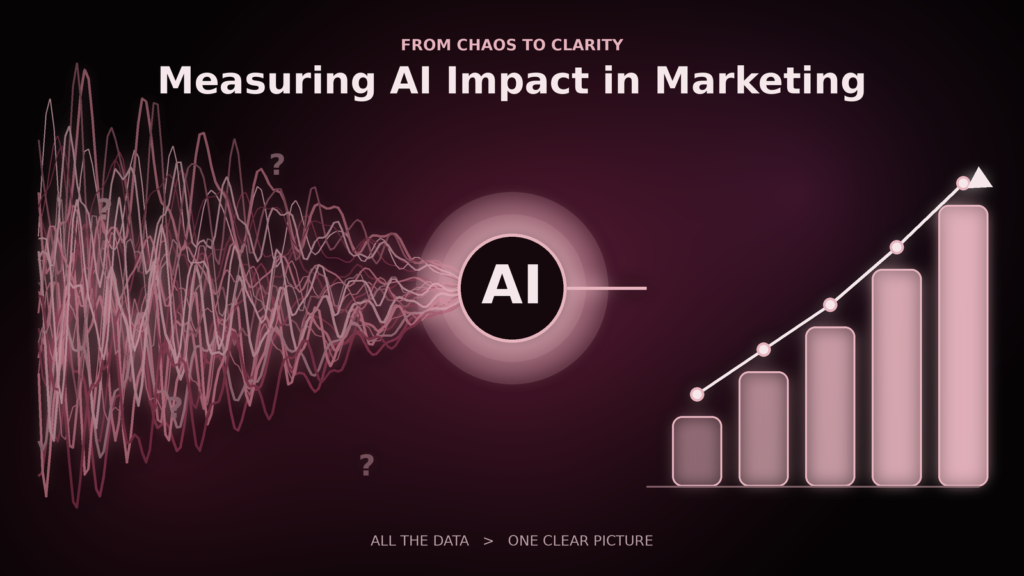
Measuring AI impact in marketing is hard because AI results blend into your whole strategy. The fix is not a bigger tool. It is a clearer method.
Pick one goal, record your baseline, test AI on one task, and give it several weeks. Then judge it by traffic, enquiries and sales, not by how much content you published.
I’m still learning and testing this myself, and I’ll share what I find as my own data comes in. If you want help setting up simple tracking for your business, talk to a digital marketing expert in Pathanamthitta and let’s get started.